
Research
Biocompatible Photocatalysis
From photochemical synthesis to biological photocontrol
Overview
The group focuses on biocompatible photocatalysis, aiming to develop visible-light-driven organic reactions and translate them into chemical tools for biological systems, enabling precise biomolecular labeling and localized modulation of biological processes.
In synthetic photochemistry, the group investigates visible-light-driven radical chemistry and excited-state reactivity, with a focus on key systems involving hypervalent iodine(III) reagents, oxygen-centered radicals, and organoboron photochemistry. These studies have led to the development of new photochemical reactions and mechanistic insights. Building on this foundation, the group addresses a central scientific question:
Central QuestionHow can solution-phase chemical reactions be translated into living cells and complex biological environments while achieving precise control over reaction sites?
To address this question, the group extends its synthetic photochemistry to biological systems, developing new technologies for photocatalytic bioorthogonal conjugation, proximity-activated photocatalytic pharmacology, and proximity labeling of proteins and lipids. These technologies enable photocatalytic manipulation of biological molecules and processes at the levels of subcellular organelles, neural circuits, and living animals.
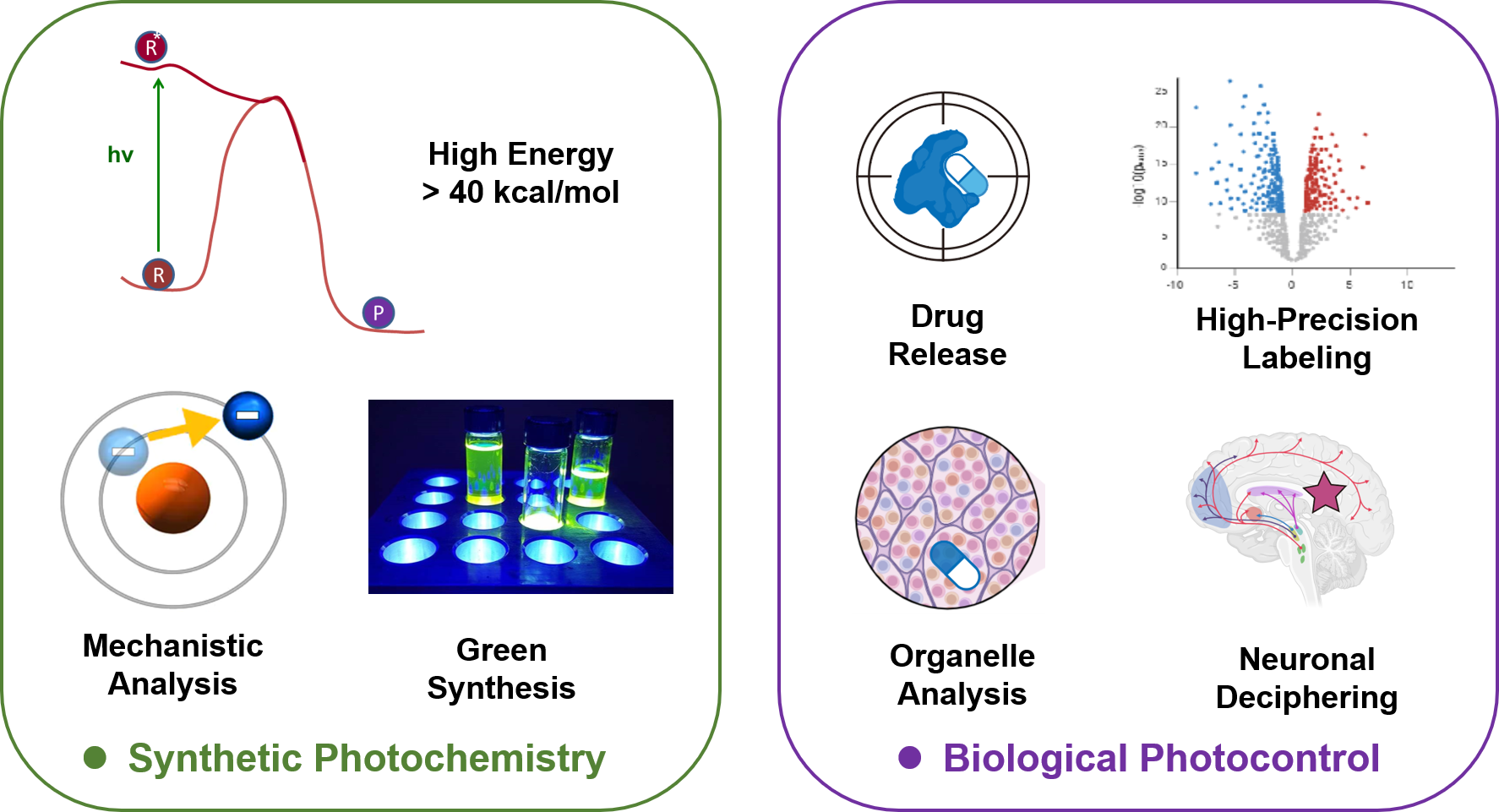
Photochemical Synthesis
BI reagent activation · O-centered radical generation · organoboron photochemistry · deboronative/decarboxylative reactions
Biological Photocontrol
Bioorthogonal conjugation · photocatalytic prodrug release · subcellular proximity labeling · in vivo neural modulation
Research in Brief
Direction 1 · Synthetic Photochemistry
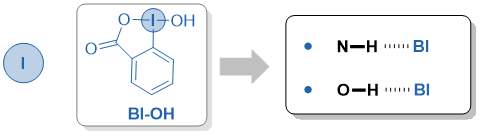
Visible light meets hypervalent iodine — a standard toolkit adopted by 80+ independent groups and pharma pipelines.
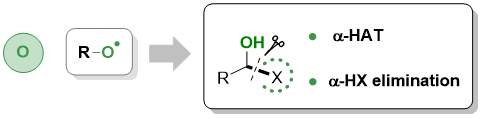
Restless radicals under gentle control: the first photochemical formyl radical chemistry.
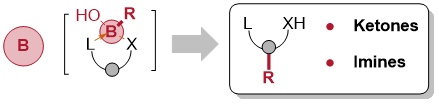
Excited-state boron chemistry, once too short-lived to explore — one-pot routes to tertiary alcohols and amines.
Direction 2 · Biological Photocontrol
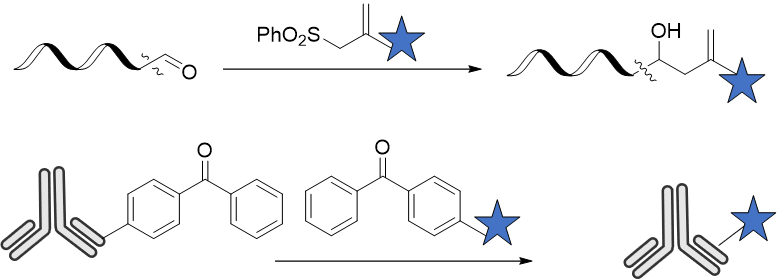
Light-powered molecular glue stitching probes onto proteins and DNA inside living cells.
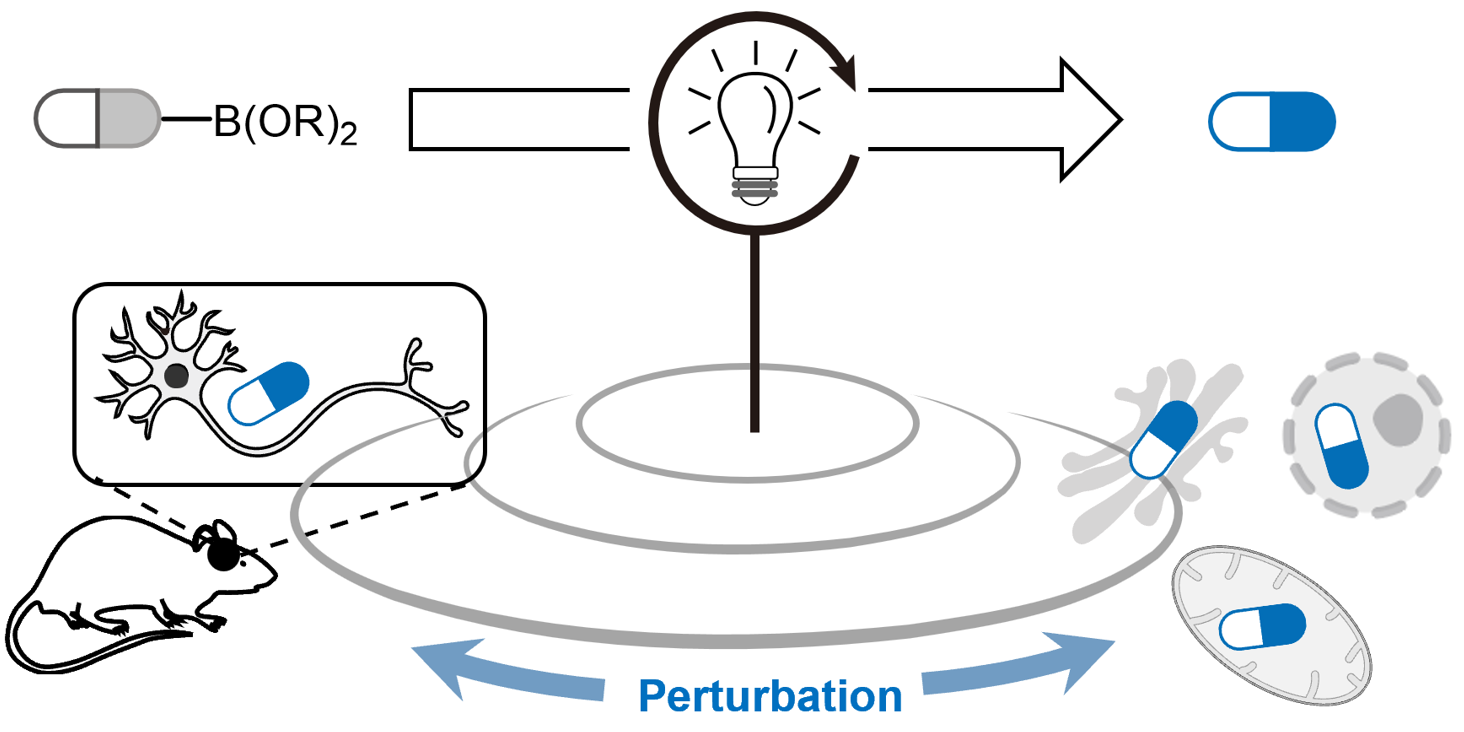
On-demand release from cells to neural circuits in live animals — no heavy-metal catalysts.
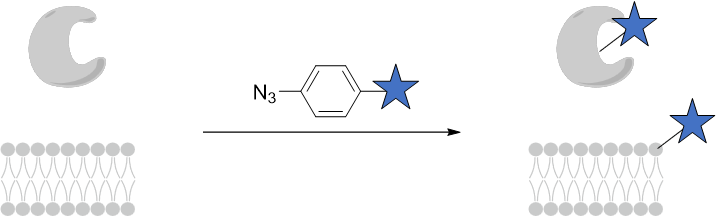
A molecular flashbulb: label exactly where light falls, mapping organelle interactomes.
1. Photochemical Synthesis
The group investigates visible-light-driven radical chemistry and excited-state reactivity, focusing on the unique reactivity of hypervalent iodine reagents, oxygen-centered radicals, and excited-state organoboron compounds. These studies have led to new reaction modes and expanded applications in organic synthesis and biological modulation.
1.1 Benziodoxole (BI) Reagents
We established a visible-light photocatalytic platform based on cyclic iodine(III) reagents and first coined the term "BI reagents" for benziodoxole-based reagents, systematically developing their applications in radical generation, capture, and transformation.
Our work has elucidated the photocatalytic activation mechanisms of BI reagents, established new BI–O bond activation and noncovalent interaction-mediated amide activation pathways, and developed synthetic methods including BI-mediated 6-endo radical cyclization. These reagents and reactions have been adopted by nearly 100 research groups worldwide and applied to the synthesis of complex natural products and the late-stage modification of pharmaceutical molecules.
Selected Publications
- Jia, K.; Chen, Y.* Photochemistry of hypervalent iodine compounds, In Patai Chemistry of Functional Groups, Chemistry of Hypervalent Halogen Compounds, Olofsson, B.; Marek, I., Rappoport, Z. Eds.; John Wiley & Sons, 2019, 855−896.
- Dong, J.; Qin, H.; Chen, Y.* Hypervalent iodine reagents in photochemistry, In Science of Synthesis: Hypervalent Halogens in Organic Synthesis, Waser, J. Ed.; Thieme: Stuttgart, 2025, 1, 457-522.
- Huang, H.; Zhang, G.; Gong, L.; Zhang, S.; Chen, Y.* Visible-Light-Induced Chemoselective Deboronative Alkynylation under Biomolecule-Compatible Conditions. J. Am. Chem. Soc. 2014, 136, 2280−2283.
- Huang, H.1; Zhang, G.1; Chen, Y.* Dual Hypervalent Iodine(III) Reagents and Photoredox Catalysis Enable Decarboxylative Ynonylation under Mild Conditions. Angew. Chem., Int. Ed. 2015, 54, 7872−7876.
- Jia, K.; Zhang, F.; Huang, H.; Chen, Y.* Visible-Light-Induced Alkoxyl Radical Generation Enables Selective C(sp3)-C(sp3) Bond Cleavage and Functionalizations. J. Am. Chem. Soc. 2016, 138, 1514−1517.
- Dong, X.1; Shao, Y.1; Liu, Z.; Huang, X.; Xue, X.*; Chen, Y.* Radical 6-Endo Addition Enables Pyridine Synthesis under Metal-Free Conditions. Angew. Chem., Int. Ed. 2024, 63, e202410297.
1.2 Oxygen-Centered and Formyl Radical Chemistry
Our research focuses on the generation and reactivity of alkoxyl radicals and related formyl radicals.
We have developed alkoxyl-radical-mediated methods for the selective functionalization of unactivated C–H bonds and C–C bond cleavage, as well as selective α-C–H activation and a method for the photochemical generation of formyl radicals via HX elimination. This strategy for photocatalytic formyl radical generation enables radical hydroformylation of sterically hindered, unactivated alkenes, including tetrasubstituted alkenes.
Selected Publications
- Zhang, J.; Liu, D.; Chen, Y.* Oxygen-centered radicals, In Science of Synthesis: Free Radicals: Fundamentals and Applications in Organic Synthesis, Fensterbank, L.; Ollivier, D., Eds.; Thieme: Stuttgart, 2021, Vol. 1, 323−380.
- Zhang, J.; Li, Y.; Zhang, F.; Hu, C.; Chen, Y.* Generation of Alkoxyl Radicals by Photoredox Catalysis Enables Selective C(sp3)-H Functionalization under Mild Reaction Conditions. Angew. Chem., Int. Ed. 2016, 55, 1872−1875.
- Zhang, J.; Li, Y.; Xu, R.; Chen, Y.* Donor-Acceptor Complex Enables Alkoxyl Radical Generation for Metal-Free C(sp3)-C(sp3) Cleavage and Allylation/Alkenylation. Angew. Chem., Int. Ed. 2017, 56, 12619−12623.
- Zhang, J.1; Liu, D.1.; Liu, S.; Ge, Y.; Lan, Y.*; Chen, Y.* Visible-Light-Induced Alkoxyl Radicals Enable α-C(sp3)-H Bond Allylation. iScience. 2020, 23, 100755.
- Liu, D.1; Yang, K.1; Fang, D.1; Li, S.; Lan, Y.*; Chen, Y.* Formyl Radical Generation from α-Chloro N-Methoxyphthalimides Enables Selective Aldehyde Synthesis. Angew. Chem., Int. Ed. 2023, 62, e202213686.
- Wang, Y.1; Bao, P.1; Dong, X.1; Lan, Y.*; Chen, Y.* Thiophenol-Catalyzed Radical Hydroformylation of Unactivated Sterically Hindered Alkenes. J. Am. Chem. Soc. 2025, 147, 31662–31670.
1.3 Organoboron Photochemistry
Our research focuses on photochemical radical reactions and concerted rearrangements of organoboron compounds.
By combining transient spectroscopy with theoretical calculations, we investigate their reaction mechanisms and explore excited-state reactivity that differs from ground-state chemistry, together with its synthetic applications. These studies have enabled the efficient synthesis of structurally complex tertiary alcohols and amines and laid the chemical foundation for subsequent development of light-promoted bioorthogonal reactions.
Selected Publications
- Xie, S.; Li, D.; Huang, H.; Zhang, F.; Chen, Y.* Intermolecular Radical Addition to Ketoacids Enabled by Boron Activation. J. Am. Chem. Soc. 2019, 141, 16237−16242.
- Hao, K.1; Li, D.1; Fu, D.; Zou, P.; Xie, S.; Lan, Y.*; Chen, Y.* Metal-Free 1,3-Boronate Rearrangement to Ketones Driven by Visible Light. Angew. Chem., Int. Ed. 2024, 63, e202316481.
- Zou, P.1; Fu, D.1; Wang, H.1; Sun, R.; Lan, Y.*; Chen, Y.* Photochemical 1,3-Boronate Rearrangement Enables Three-Component N-Alkylation for α-Tertiary Hydroxybenzylamine Synthesis. Nat. Commun. 2024, 15, 10234.
- Zou, P.1; Fu, D.1; Jin, J.1; Xu, C.1; Cai, R.; Li, S.; Zeng, Y.*; Lan, Y.*; Chen, Y.* Photochemical Synthesis of β-N-heterocycle Alcohols via a Coordination-Induced 1,5-Boronate Sigmatropic Rearrangement. JACS Au, 2026, 6, 4458–4468.
Related Reviews
- Hu, C.; Chen, Y.* Biomolecule-Compatible Chemical Bond-Formation and Bond-Cleavage Reactions Induced by Visible Light. Tetrahedron Lett. 2015, 56, 884−888.
2. Biological Photocontrol
Our group seeks to extend organic photochemistry to living cells and complex biological systems, systematically investigating the compatibility of photochemical reactions with aqueous media, living cells, and biological microenvironments. Building on this foundation, we exploit the localized positioning of photocatalysts and proximity effects to confine chemical reactions to specific molecules or cellular regions, enabling localized photochemical regulation of biomolecules and biological processes.
2.1 Photocatalytic Bioorthogonal Conjugation
Our group has extended our original photocatalytic synthetic methods to aqueous and biological environments through reagent design and reaction optimization, establishing photocatalytic approaches for bioorthogonal conjugation of biomolecules, including proteins and nucleic acids.
Representative studies include alkyl radical coupling based on kinetic trapping and radical–radical coupling using thermodynamically stabilized ketyl radicals. These methods expand the applications of photocatalytic bioorthogonal chemistry in protein labeling and crosslinking, and provide new chemical tools for investigating biomolecular interactions at atomic resolution.
Selected Publications
- He, R.; Zhang, Y.*; Chen, Y.* Controlling Radical Reactivity for Visible-Light Bioorthogonal Chemistry. ChemPhotoChem, 2026, 10, e70327.
- Yang, J.; Zhang, J.; Qi, L.; Hu, C.; Chen, Y.* Visible-Light-Induced Chemoselective Reductive Decarboxylative Alkynylation under Biomolecule-Compatible Conditions. Chem. Commun. 2015, 51, 5275−5278.
- Qi, L.; Chen, Y.* Polarity-Reversed Allylations of Aldehydes, Ketones, and Imines Enabled by Hantzsch Ester in Photoredox Catalysis. Angew. Chem., Int. Ed. 2016, 55, 13312−13315.
- Zhang, Y.1; Huang, Y.1; Che, Q.1; Chen, Y.* Photocatalytic Aldehyde Allylation for Site-Specific DNA Functionalization. Chin. J. Chem. 2025, 43, 97−103.
- Tan, J.1; Hao, K.1; Yuan, Y.1; Xie, S.1; Qi, L.1; Che, Q.1; Li, Y.; Wang, R.*; Zhang, Y.*; Chen, Y.* Bioorthogonal Photocatalytic Protein Labeling and Cross-Linking Enabled by Stabilized Ketyl Radicals. J. Am. Chem. Soc. 2025, 147, 49, 45774–45784.
2.2 Proximity-Activated Photocatalytic Pharmacology
Building on the localized positioning of photocatalysts and the limited diffusion of superoxide radical anions, our group has achieved the localized release and regulation of small molecules. We have termed this strategy proximity-activated photocatalytic pharmacology.
Our work encompasses the development of bioorthogonal photocatalytic deboronative hydroxylation and the construction of targeted catalytic systems based on organic dyes, SNAP-tag-directed hybrid photocatalytic systems, and the 12 kDa miniSOG photoenzyme. These approaches extend photocatalytic regulation across multiple spatial scales, from subcellular organelles to neural circuits.
Selected Publications
- Zhang, H.1; Wang, X.1; Xu, T.; Chen, Y.* Proximity-Activated Photocatalytic Pharmacology: From Subcellular Compartments to Neural Circuits. Acc. Chem. Res., 2026, 59, 3606–3618.
- Wang, H; Li, W.; Zeng, K.; Wu, Y.; Zhang, Y.; Xu, T.*; Chen, Y.* Photocatalysis Enables Visible Light Uncaging of Bioactive Molecules in Live Cells. Angew. Chem., Int. Ed. 2019, 58, 561−565.
- Zeng, K.1; Jiao, Z.1; Jiang, Q.; He, R.; Zhang, Y.; Li, W.*; Xu, T.*; Chen, Y.* Genetically Encoded Photocatalysis Enables Spatially Restricted Optochemical Modulation of Neurons in Live Mice. ACS Cent. Sci. 2024, 10, 1, 163–175.
- Che, Q.1; He, R.1; Zhang, Y.1; Zhang, H.; Zeng, K.; Chen, Y.* Miniature Photoenzyme Enables Organelle-Specific Cellular Control via Deboronative Hydroxylation. Angew. Chem., Int. Ed. 2025, 64, e15137.
- He, R.1; Zhao, Q.1; Chen, Z.; Wang, X.; Che, Q.; Zeng, K.; Zeng, Y.*; Zhang, Y.*; Chen, Y.* Protein-Controlled Photochemical Redirection Enables Proximity-Activated Red-Light Photocatalytic Pharmacology. ACS Cent. Sci. 2026, DOI: 10.1021/acscentsci.01125u.
2.3 Proximity-Activated Photocatalytic Labeling of Proteins and Lipids
The group has also developed an aryl azide-based photocatalytic labeling technology for biomolecules that uses a proximity-activation strategy. By employing metal-free photocatalysts capable of organelle localization, this approach enables selective protein labeling within specific organelles.
In addition, the group developed novel lipid-labeling probes for photocatalytic, organelle-selective lipid labeling, enabling the first investigation of dynamic lipid transport processes within cells.
Selected Publications
- Zeng, K.; Han, L.; Chen, Y.* Endogenous Proteins Modulation in Live Cells with Small Molecules and Light. ChemBioChem 2022, 23, e202200244.
- Zhang, Y.1; Tan, J.1; Chen, Y.* Visible-Light-Induced Proteins Labeling in Live Cells with Aryl Azides. Chem. Commun. 2023, 59, 2413−2420.
- Wang, H.1; Zhang, Y.1; Zeng, K.1; Qiang, J.1; Cao, Y.; Li, Y.; Fang, Y.; Zhang, Y.*; Chen, Y.* Selective Mitochondrial Protein Labeling Enabled by Biocompatible Photocatalytic Reactions inside Live Cells. JACS Au 2021, 1, 1066−1075.
- Zhang, Y.1; Han, L.1; Tian, X.; Peng, C.; Chen, Y.* Ligand-Directed Caging Enables the Control of Endogenous DNA Alkyltransferase Activity with Light inside Live Cells. Angew. Chem., Int. Ed. 2022, 61, e202115472.
- Chen, X.1; He, R.1; Xiong, H.; Wang. R.; Yin, Y.; Chen, Y.*; Zhu, Z.* Quantitative Profiling of Lipid Transport between Organelles Enabled by Subcellular Photocatalytic Labeling. Nat. Chem. 2025, 17, 1534–1545.
Related Reviews
- Chen, Y.* Illuminating Biology with Visible-Light-Induced Biocompatible Reactions. ChemPhotoChem 2020, 4, 319−320.