中文简介
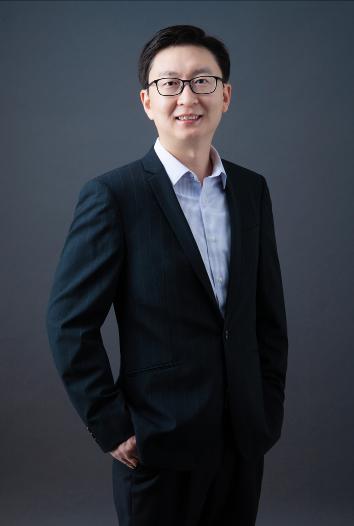
陈以昀博士,现任中国科学院上海有机化学研究所研究员、生命过程小分子调控全国重点实验室课题组长,并兼任上海科技大学及国科大杭州高等研究院教授。本科毕业于北京大学,于普林斯顿大学获得博士学位,随后在哈佛大学和霍华德·休斯医学研究所(HHMI)从事博士后研究。
课题组的研究方向为生物相容光催化,即发展能够在活细胞与活体中工作的光催化反应,并将其用于生物活性分子的释放、标记与调控。研究主要围绕两个方向展开。
其一,合成光化学。课题组建立了以环状三价碘(benziodoxole,BI)试剂为基础的可见光催化体系,发展了一系列自由基的生成与转化方法,包括烷氧自由基的 α-位反应特性与甲酰自由基的光化学生成;此外,还发现并发展了有机硼化合物的光诱导迁移反应,实现了温和光化学条件下的自由基与极性转化,并将其应用于有机合成与化学生物学。相关试剂与反应已为多个课题组所采用。
其二,生物光调控。以有机硼酸酯与叠氮化合物为反应骨架,利用邻近激活效应实现蛋白质与脂质的选择性标记;建立了亚细胞水平的光催化调控体系,用于前药的定点激活与释放,课题组正将这一体系推进到活体水平的神经元调控,这也是目前的研究重点。
陈以昀博士曾获国家自然科学基金优秀青年科学基金、中国化学会首届光化学优秀青年科学家奖、药明康德生命化学研究奖、上海市东方英才计划领军项目以及国科大优秀授课教师等荣誉。现担任中国人民政治协商会议上海市徐汇区委员会专家智库成员、Organic Chemistry Frontiers 顾问编委、ChemPhotoChem 创刊编委、中国化学会光化学专业委员会委员、中国神经科学学会离子通道与受体专业委员会常委委员等职务。曾受邀在第十八届比利时有机合成BOSS论坛、第二十八届日本碘科学大会等国际学术会议作大会报告。
Biography
Prof. Dr. Yiyun Chen is a Principal Investigator at the State Key Laboratory of Chemical Biology, Shanghai Institute of Organic Chemistry (SIOC), Chinese Academy of Sciences, and holds professorships at ShanghaiTech University and the Hangzhou Institute for Advanced Study, University of Chinese Academy of Sciences. He received his B.S. from Peking University and his Ph.D. from Princeton University, followed by postdoctoral research at Harvard University and the Howard Hughes Medical Institute (HHMI).
The group's research centers on biocompatible photocatalysis — the development of photocatalytic reactions that operate in live cells and organisms, and their application to the release, labeling, and regulation of bioactive molecules. The work proceeds along two directions.
The first concerns synthetic photochemistry. The group has established a visible-light photocatalytic platform based on cyclic iodine(III) benziodoxole (BI) reagents, developing methods for radical generation and transformation, including the α-reactivity of alkoxyl radicals and the photochemical generation of formyl radicals. They have also discovered and developed light-induced rearrangements of organoboron compounds, enabling radical and polar transformations under mild photochemical conditions for applications in organic synthesis and chemical biology. Several of these reagents and reactions have since been adopted by other laboratories.
The second concerns biological photocontrol. Using organoboronates and azides as reaction scaffolds, the group exploits proximity activation for the selective labeling of proteins and lipids, and has established photocatalytic systems for chemical regulation at the subcellular level, enabling localized activation and release of prodrugs. Efforts are under way to extend this approach to neuromodulation in living animals. This direction currently represents the main focus of the laboratory.
Dr. Chen has received the NSFC Excellent Young Scientists Fund, the Chinese Chemical Society Award for Outstanding Young Scientist in Photochemistry, the WuXi AppTec Life Chemistry Research Award, the Shanghai Oriental Talent Program Distinguished Leadership Project, and the UCAS Outstanding Teaching Award. He serves on the Expert Think Tank of the Xuhui District Committee of the Chinese People's Political Consultative Conference, the Advisory Board of Organic Chemistry Frontiers, the Founding Editorial Board of ChemPhotoChem, the Photochemistry Committee of the Chinese Chemical Society, and the Ion Channels and Receptors Committee of the Chinese Society for Neuroscience. He has been invited to deliver plenary lectures at international meetings including the 18th Belgian Organic Synthesis Symposium (BOSS XVIII) and the 28th Annual Meeting of the Japan Iodine Science Society.